Direction ✶ 13 August 2026 ✶ 6 min read
What a creative director actually does, and when a Dublin business needs one
A creative director in Dublin owns the idea and the standard across a campaign. Here is what the role really does, and when your business needs one.
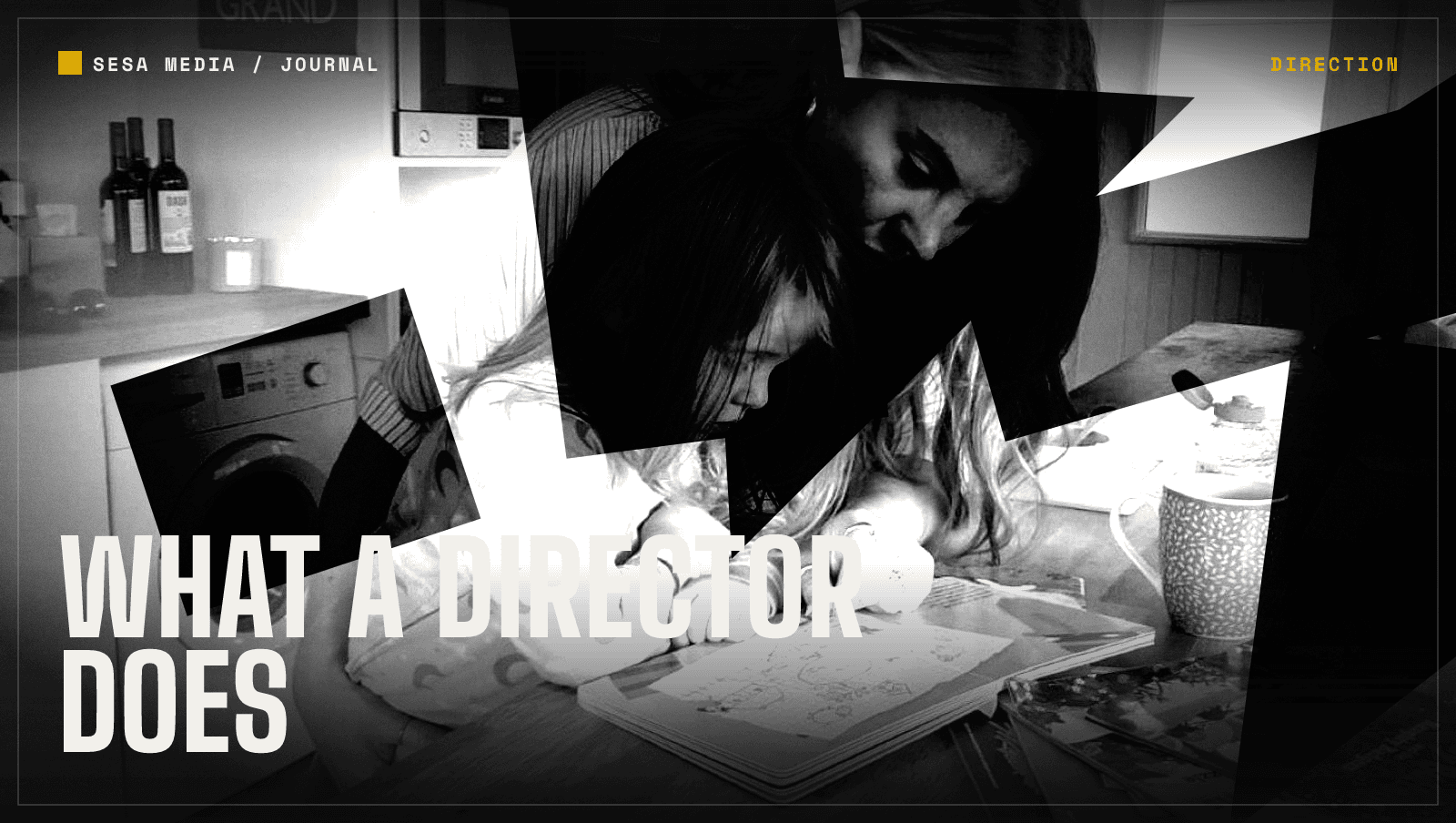
Owners ask us some version of the same question every month. What does a creative director actually do, and how is that different from the designer who makes the thing look good. The honest answer is that a creative director owns the idea and the standard, and everyone else owns a piece of the execution.
That sounds abstract until you watch it happen, so let us tell you about a Tuesday.
We were in a cold warehouse off the Naas Road, three hours into a shoot for a food brand that was about to relaunch. The photographer had a clean frame. The lighting was right, the product was styled, the whole thing was technically correct and completely dead. It looked like every other food shot you have scrolled past without stopping. Everyone in the room could feel it and nobody could say why, because on paper nothing was wrong.
Our creative director watched two more frames go by, then walked in and did one thing. She took the tidy plate away, told the chef to work at the actual pass, hands in shot, a bit of mess on the board, and asked the photographer to shoot it like he was stealing the picture rather than composing it. Fifteen minutes later we had the image that ran on every bus shelter in the campaign. Same product, same photographer, same budget. One decision changed what the whole thing was saying.
The job is a decision, not a deliverable
That is the part people miss. A creative director does not usually make the artefact. They rarely open the design file or hold the camera. What they do is decide what the work is trying to say, then hold every person and every frame to that single idea until it is finished.
You can see the difference most clearly against art direction, which people mix up with it constantly. Art direction is how it looks. Creative direction is what it means and why it exists at all. We wrote a longer piece on exactly where those two roles split in creative direction versus art direction, explained in plain terms, because briefing the wrong one is a common and expensive mistake. The short version is that the art director makes the plate beautiful and the creative director decides the plate should not be there.
The reason this matters commercially, and not just aesthetically, is that consistency of idea is where money actually lives. McKinsey's Business Value of Design report tracked 300 companies over five years and found the ones in the top quartile for design performance grew revenues and shareholder returns at nearly twice the rate of their industry peers. That gap does not come from prettier logos. It comes from a whole organisation pulling in one direction, which is precisely the thing a creative director is paid to protect.
What one actually does all day
Strip away the mystique and the work is fairly plain. A creative director in Dublin spends most of their week making sure the idea survives contact with reality.
They set the concept before anything is made, so the photographer, the copywriter, the developer and the social person are all building the same thing rather than four good things that do not fit together. They write or approve the brief that everyone else works from. They sit in the room, or on the call, at the exact moments where a project quietly drifts, and they pull it back. And near the end, they are the person who looks at work that is technically finished and says it is not good enough yet, which is the least popular and most valuable thing anyone on a project can do.
A designer asks whether the work is done. A creative director asks whether it is right, and those are almost never the same question.
Most of the value is invisible because it shows up as things that did not go wrong. The campaign that stayed coherent across a website, a shopfront and forty pieces of social. The launch that sounded like one company instead of three freelancers who never spoke. You notice the absence of a creative director far more than the presence of one, usually about six weeks after launch when nothing quite matches and nobody can say why.
When a Dublin business actually needs one
Here is where we will be straight with you, because it is not always. Plenty of good work gets made without anyone holding that title, and paying for creative direction on a single logo or a one-off flyer is money spent on overhead you do not need.
You need one when the number of moving parts crosses a line. One asset, probably not. A full rebrand, a campaign that runs across print and digital and social at once, a launch where a dozen people are making things that all have to feel like the same company, that is when the absence of a single owning mind starts to cost real money. The failure mode is not that the individual pieces are bad. It is that they are all fine and none of them agree with each other, and the customer feels that incoherence without ever being able to name it.
There is a scale test we use with owners. If you can hold the whole thing in your own head and brief each supplier yourself, you may not need to hire the role, though you are quietly doing the job. Once the project is too big for one founder to carry the vision through every decision, someone has to, and doing it badly by committee is how brands end up looking like a group project. We go deeper on the strategy behind all of this in our guide to creative direction in Ireland, including how to tell whether you need a permanent hire or a director attached to one project.
The other honest signal is repetition. If your last campaign, or your last two, launched feeling scattered, and you keep briefing suppliers separately and hoping it comes together, the missing piece is almost always the person whose entire job is to make sure it does. Campaign strategy without someone holding the line on it is just a document nobody follows.
The version that pays for itself
Good creative direction is boring to describe and obvious to see. It is the reason a customer stops on the bus shelter, the reason your site and your Instagram and your packaging feel like one company, the reason a launch lands as a single clear idea instead of a pile of competent fragments.
The warehouse shoot is the clearest way we can put it. Nothing changed except one decision made by the one person whose job was to protect the idea. That is the whole role. If your next project is big enough that no single person is currently holding it together, that is the moment to have the conversation, and you can start one with us here. If it is not, save your money and keep briefing well. We would rather tell you that than sell you a title you do not need yet.
Have a project in mind?